
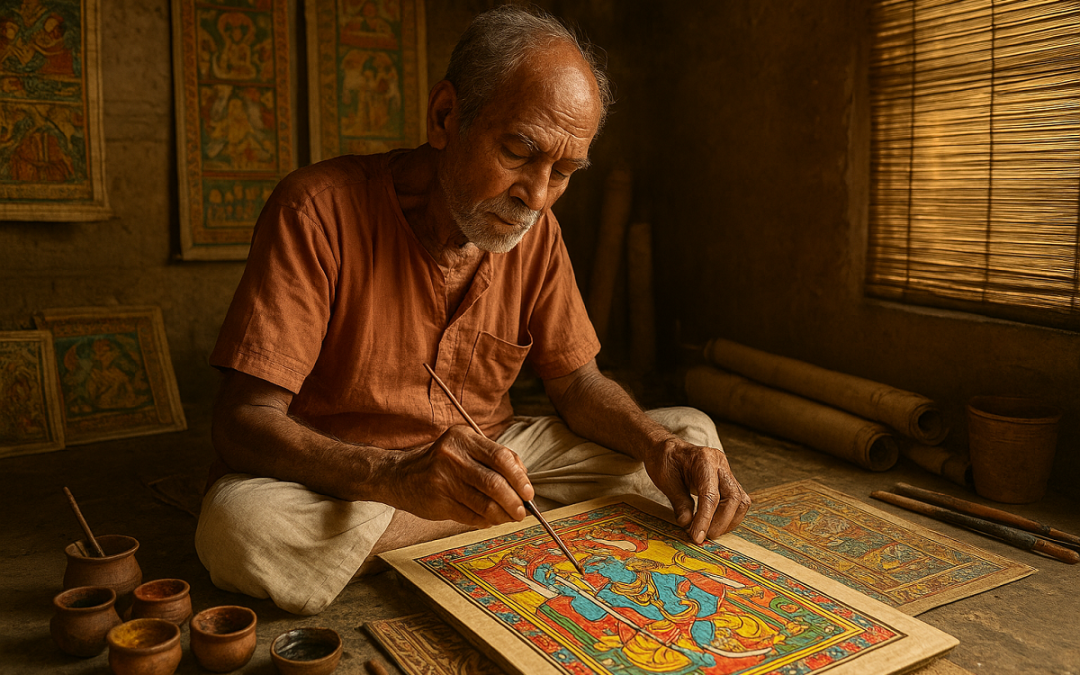
The Last Patua: One Man Keeping 1000-Year Art Alive
Swapan Chitrakar’s hands won’t come clean. Red ochre. Yellow turmeric. Blue indigo. Stains from colors ground by hand.
He’s 67, nearly blind in one eye, and one of only five remaining Patua scroll painters in Nadia district. By next decade, he might be the last.
“My son doesn’t want to learn,” Swapan tells me at his Ghurni village workshop. “He says there’s no future in this. He’s probably right.”
What is Patachitra?
Ancient art where painters create stories on long scrolls, then travel village to village singing the story while unrolling it. Storytelling + visual art + performance combined.
Before TV, cinema, or books reached villages – Patuas brought stories to people. The tradition is 1000+ years old.
Now? Dying out.
The economics:
Swapan works 5 months on one scroll. If lucky, he sells it for ₹8,000. That’s ₹1,600 per month.
His son works at a mobile shop earning three times that.
“I asked him to learn. He asked if I can promise he won’t go hungry as an artist. I couldn’t.”
What makes it special: Swapan sings while painting, composing verses in traditional Patua geeti meter. He shows me a scroll about goddess Manasa and begins singing, pointing to each painted scene.
It’s mesmerizing. This isn’t just painting – it’s multimedia from before multimedia existed.
His grandfather painted the 1943 famine, partition, the language movement. Historical documents by people who lived through them. He shows me a fragile 70-year-old scroll of refugees fleeing – women carrying children, homes burning.
No history book captures what this scroll does.
Survival tactics: Swapan paints contemporary issues now – climate change, COVID-19. “An NGO commissioned the pandemic scroll. It sold well.”
He tried selling online. “Middlemen take so much. I get ₹3,000 from a scroll listed for ₹25,000.”
The others: Only four more Patuas remain in Nadia. One is 72, still painting. One stopped five years ago – health issues. One talented woman sells to Kolkata buyers who want “ethnic art” for living rooms.
“They don’t care about the story. Don’t want me to sing. Just want something ethnic to show friends. But if that keeps me painting, I’ll take it.”
What’s lost: When Swapan’s gone, museums will preserve some scrolls. UNESCO recognizes it. NGOs run workshops.
But Patachitra isn’t meant for museums. It’s meant for village squares, festivals, evenings when communities gather to hear stories sung and painted.
What he wants: “Just remember we existed. Remember that before all this modern stuff, there were people who carried stories on their backs, who painted gods and history, who sang songs that kept memories alive.”
“Is that enough?”
He shrugs. “The world moved on. I’m still here, painting. Maybe that’s enough.”
But it shouldn’t be.
How to help: Buy directly (no middlemen), share this story, invite Patuas to cultural events, document old scrolls in your family.
Swapan returns to painting. Sita’s face takes shape – beautiful, serene, unaware of suffering coming her way.
Kind of like Patachitra itself.